


Just imagine being an architecture student in the late 1980s, in the city of emperors and popes. Poor as it gets. My father, an architect himself, somehow always managed to keep his pockets empty. And there I was, hungry for whatever Rome could offer me. By a stroke of chance, I landed a full scholarship and lived in a student dormitory just a few steps from the Stadio Olimpico — where all of Rome gathered to shout and cheer.
This fairly modern building, with its view of the Italian Ministry of Foreign Affairs and a beautiful globe sculpture by Gio Pomodoro, became my base. From my room, I was inching closer to what even my own parents thought impossible: an architecture degree. Was I happy? Most likely not. Why? Wouldn’t I want what I had been dreaming of for six long years? Why wasn’t I thrilled at the idea of success and the prospect of entering a Roman studio of some notoriety? There was a hole in my mind. Was it because the endless, brutal studies had made my appetite for “designing the houses of the future” less yummy? Or because there were so many unemployed architects in the country that I quickly realized I’d soon be one of them? I’m still not sure to this day.
What I do know is that those feelings opened the way to my real profession — the one I’ve loved and pursued for more than thirty years. Many discover design by profound choice. I stumbled into it by chance. Chance, with a pinch of deeply felt sensations. Still, not something I thought myself capable of — such a brilliant, demanding profession.
Back then, I was more concerned with filling my lunch plate, buying a pair of pants, or putting fuel in my white Vespa. That Vespa was my only means of mobility, purchased with the last bits of Sicilian savings I had scraped together after my previous one was stolen from under my balcony in Sicily—on the very day I was leaving for Rome to become a student. But that is another story entirely.
Finding a job in those days was nothing like it is today. The internet was still a privilege for those who could afford a massive computer, and a “browser” could barely load a page at the speed of a slug. Most people found jobs through newspapers — national or local — which sometimes were left for free in the dorm’s ground-floor lounge for us to read.
Desperate for work, I began scanning every listing with little success. The only job I managed to land was as a mail courier for the city of Rome, which, in those years of rapid business expansion, needed to deliver correspondence faster than the regular post could handle. I accepted my grim fate and gave it a try. The work was punishing—low pay, heavy on the body, harsh on the skin—but I had no other choice. For a while, it was manageable. I could cook small meals on my roommate’s stove and even share some of my meager earnings with him. He was a fashion student, in an even tougher spot than I was—slightly disabled, unable to drive, but endlessly creative. His sewing machine rattled on in our room, producing miracles out of nothing.
Then one morning, a small announcement in the paper caught my eye: “Small design studio seeking an intern designer with the will to try his best at creating innovative solutions for local and global clients.” Could I do it? Could I bluff my way in? My father had always seemed to enjoy identity design more than architecture, but when it came to the early days of software, I was a complete zero — perhaps even less.
I stood there pondering, staring at the dirty clothes from my courier job, at my own tired face in the bathroom mirror. Maybe I should give this a shot. Surely I won’t get it. But what draws me isn’t only the job. It’s the idea of design itself. Could this be my first real calling? Could I prove myself wrong?
After some debate with my roommate, I decided to apply. No emails then — just a phone call. They invited me to visit that Friday. Panic set in: what to wear? What skills to invent? Being an architecture student gave me some visual taste, sure, but was that enough? My roommate calmly told me: “Anything is worth trying.” I still hold onto that advice, thirty-five years later.
As for clothing, he proposed to quickly whip up a coat just for that occasion. I protested I could never pay for it. He replied: “You’ll pay me back when you get the job.” Nervous laughter. I promised instead to bring Sicilian weed on my next trip south.
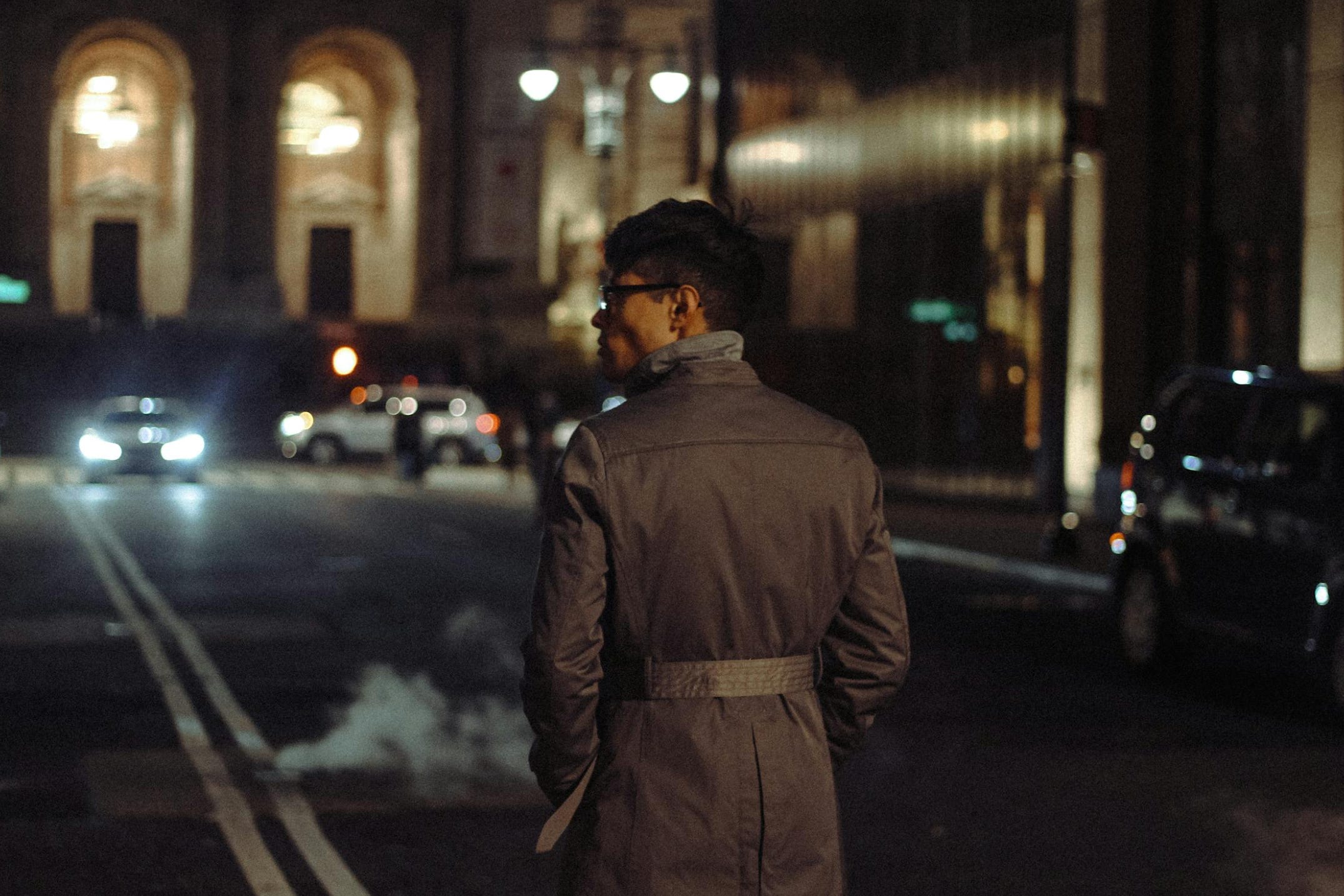
The coat was nothing short of amazing. Something between Dracula’s wardrobe and sharp cuts that only the boldest fashion designers could dream of. Dark blue, almost black, with subtle details in an even darker tone. It wasn’t just a coat. It was a flying carpet, stitched with dynamism and charm. I wish I still had it today — it would be as contemporary as any piece of clothing I’ve ever worn.
Friday arrived. Nervously, I climbed the stairs of a small but well-placed building across from Italian Public TV on Via Teulada, famous for its celebrities and bar culture. I knocked. The door opened to two men who looked me over with a mix of curiosity and suspicion. The coat clearly did its magic. “Who is this student,” they must have thought, “on the verge of becoming an architect, now daring to enter graphic design?”
We talked for hours. Bauhaus, Tschichold typography, Fronzoni, the Vignellis, Chermayeff & Geismar, Wim Crouwel. Then the computers: big gray Apples, with the very first versions of Photoshop and Illustrator. “Do you know these?” they asked. Not much, I admitted. “My father uses one for CAD.” They smiled. “That’s something. Would you like to learn?”
“Yes,” I grinned. “Learning is my favorite activity.” Then they showed me the manuals — and my grin quickly faded. Still, how long could it take?
They made it clear: if I wanted to eventually earn money, I had to learn the software as fast as humanly possible. Only once I could produce real work would they pay me. When they mentioned the possible salary — about three times what I made as a courier — I almost fainted. They said there were other candidates and the decision would take a few days.
We shook hands. I left in a strange mood — half-terrified, half-exhilarated. Was this design? I wanted it. Needed it. Like a drug of choice. Architecture suddenly looked pale. My books stared at me on the desk, but all I could think was: No way. I want typefaces, logos, lines, and printing machines.
The wait was endless. When the dorm’s hallway phone rang, I assumed it was my mother scolding me for not calling. Instead, a James Bond–like voice introduced himself: Claudio Conti from the studio. “You’re in. We’ve decided to give you a chance. When can you start?” The floor fell away. My heart pounded. I whispered: “That’s awesome. Anytime you want me.”
And so it began. I learned at superhuman speed, producing projects alongside them in our tiny studio of three. I was happy, thrilled. Later, when summer came and we’d grown closer, like friends more than colleagues, I asked what made them choose me. They laughed and said it had been a hard call between me and a talented woman. Then one confessed: “It was the coat. You looked different. Intriguing. Hungry to create. So we went with you.”
I was speechless. A handmade, improvised coat had changed my career forever. Thirty-five years later, unfortunately the coat is gone, but the memory and gratitude remains — stitched deep, like a tattoo on the bottom of my heart.
For the curious: the studio was called Boogie Movie. A small but brilliant design agency in the heart of Quartiere Prati, Rome. Its two partners, Claudio Conti and Gianni Fasciolo, which truly remain dear to my heart, their generosity and guidance in my early days as a young and thirsty designer still always walk with me. As for Marco, my wonderful fashion designer roommate, he is now thriving at a global fashion firm I won’t name out of privacy respect. To him goes my deepest admiration—for giving me a “fashionable” boost when I really needed a chance.
Racconto brillante (ho riso spesso) che denota la tua creatività trasversale. Grazie, mi ha fatto molto piacere. Se potessi aggiungere il terzo socio lo farei leggere anche a Enrico Liberatore ;-) ahahah!